THESE ARE NOT “DETAILS”, THIS IS NARRATIVE.
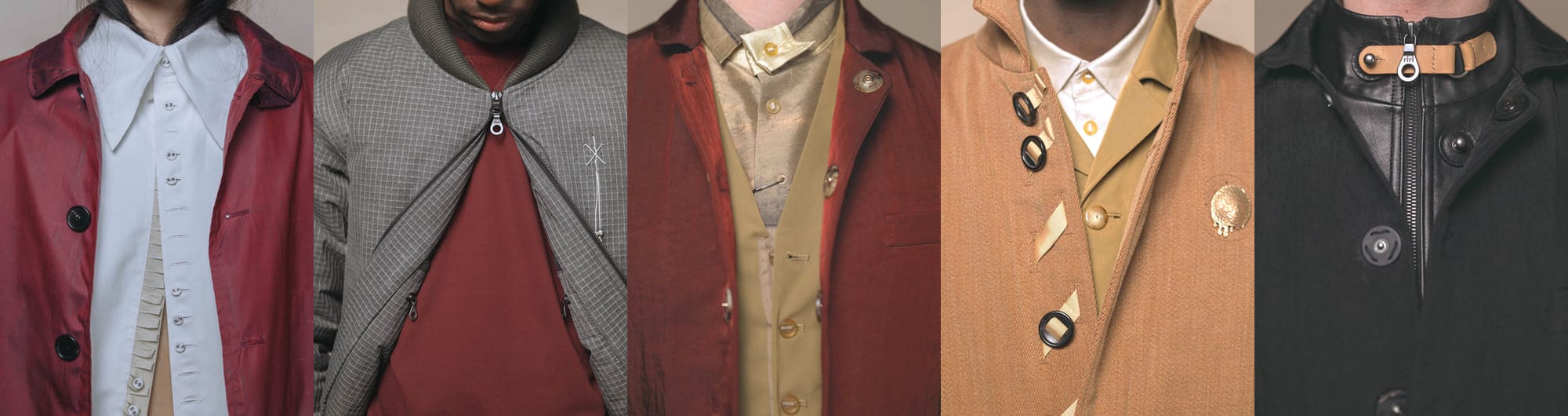
The techniques explored here have their roots in menswear tradition, but they were also born at the intersection of accident and adaptation. They occur in the same garment-zones which have always distinguished menswear self-expression – up toward the neck drawing attention to the face, out at the wrists complementing the way hands are used to communicate and at the waist where our gravity is centered and core instincts reside.
These might rightly be called details. But they are also our way of celebrating the traditions of menswear while not being afraid to improvise and reinvent them just a little.
For us these represent the milestones of Where We Come From, Where We Belong and Where We Hope to Go. For us these are the chapter markers of our shared memory and narrative.
IMPROVISED COLLAR
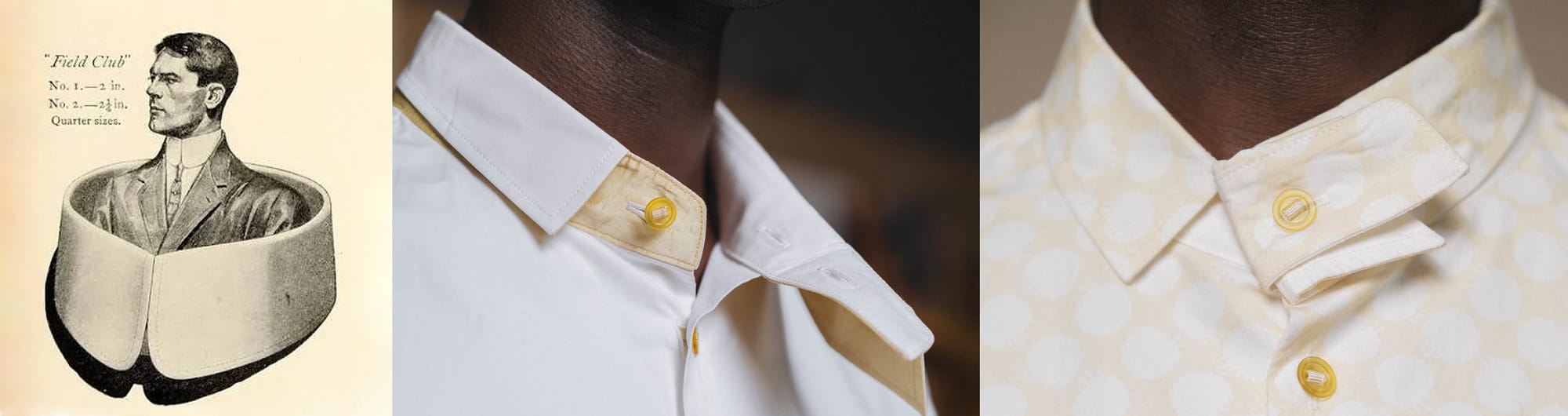
The tradition of bringing interest up toward the face by placing folded fabric at the neck has its roots in the history of the necktie or ascot. Besides creating fabric contrasts, the process of tying a necktie in a half-Windsor, full-Windsor or four-in-hand represents an important ritual of self expression – a moment of quiet meditation.
Our twist on this idea came from the combination of accident and adaptation that defines improvisation. In mocking up shirt concepts in our studio we often graft together parts from vintage garments. While we were stitching a vintage “detachable” collar to an antique banded-collar workshirt we realized the available collar was too long for the shirt. We continued anyway to see what could come out of it. We realized that there were at least 4 ways to convert the excess length into a folded detail at the throat which would duplicate the effect of knotted necktie to some degree.
The versions included in the AW26 range allow for the interplay of print, solid, silk and cotton to produce different sartorial effects.
UNATTACHED
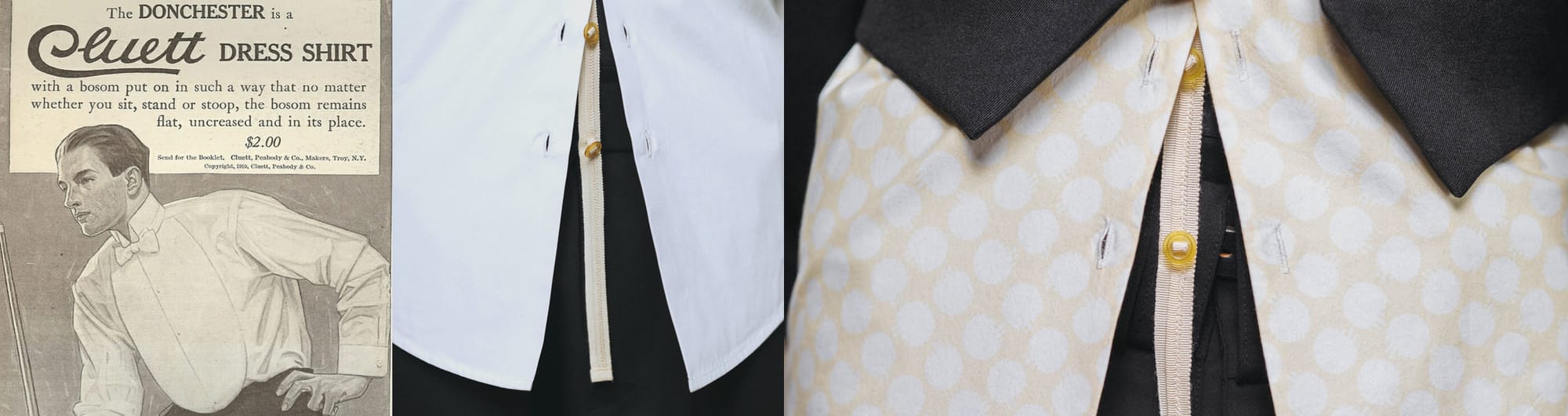
Even to this day formal bib-front tuxedo or evening shirts are sometimes closed via a button-set secured to an independent length of taping. So, the shirt doesn’t actually have any buttons “attached” to it and is instead distinguished by buttonholes sequenced along the edges of both front panels.
We adapted this idea to close one of our shirt concepts while fastening the folded collar described above at the same time. The system can also be styled to leave a few lower button positions open when the shirt is worn untucked. The independent grosgrain tape then hangs free at the waist creating a bit of sprezzatura attitude and interest at the waist.
PUNK FAN?
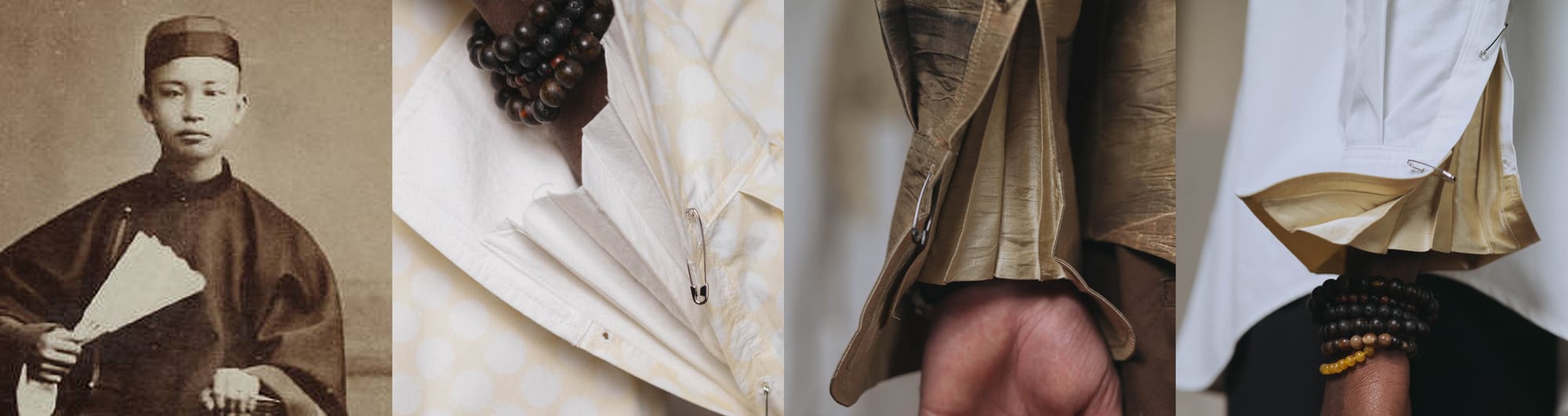
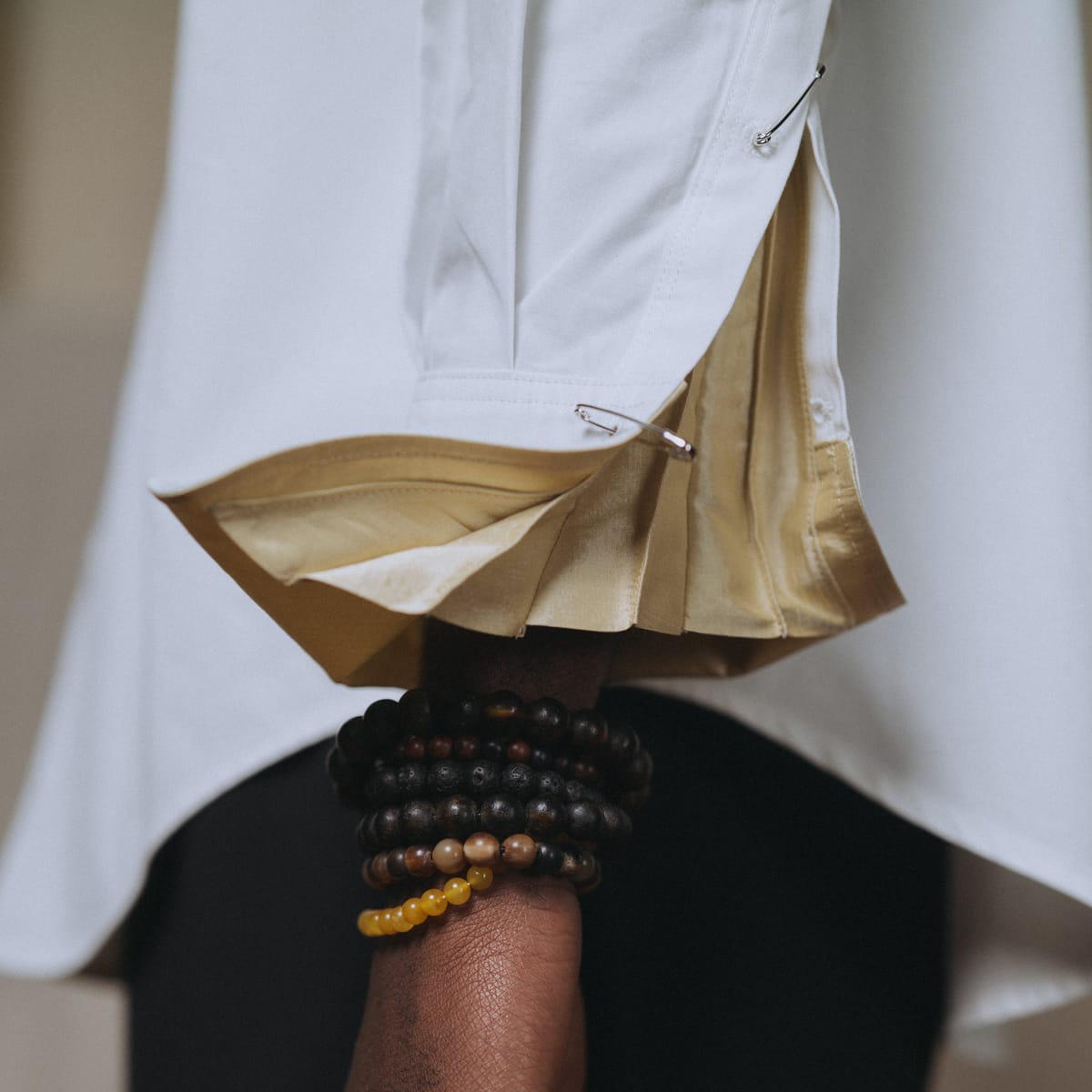
Yes, some but not all. But here we’re talking about a punk twist on a different sort of fan altogether. We focus a fair amount on anatomical pattern cutting. We try to keep it subtle so it doesn’t veer off into sports-tech but one place we try to integrate a bit of anatomy is at the cuffs.
In one case this resulted in an asymmetrical barrel cuff where an elongated section complements and covers the back of the hand. This left a longer than usual sleeve opening and we realized there was sufficient space to insert a pre-pleated gusset reminiscent of a fan-fold. Like a traditional French Cuff, it’s a way of folding a bit of expressive texture at the wrist.
We decided to finish the openings with tiny embroidered holes and provide a set of four sterling silver safety pins to close them. A bit of DIY to dial back the dandyism a bit.